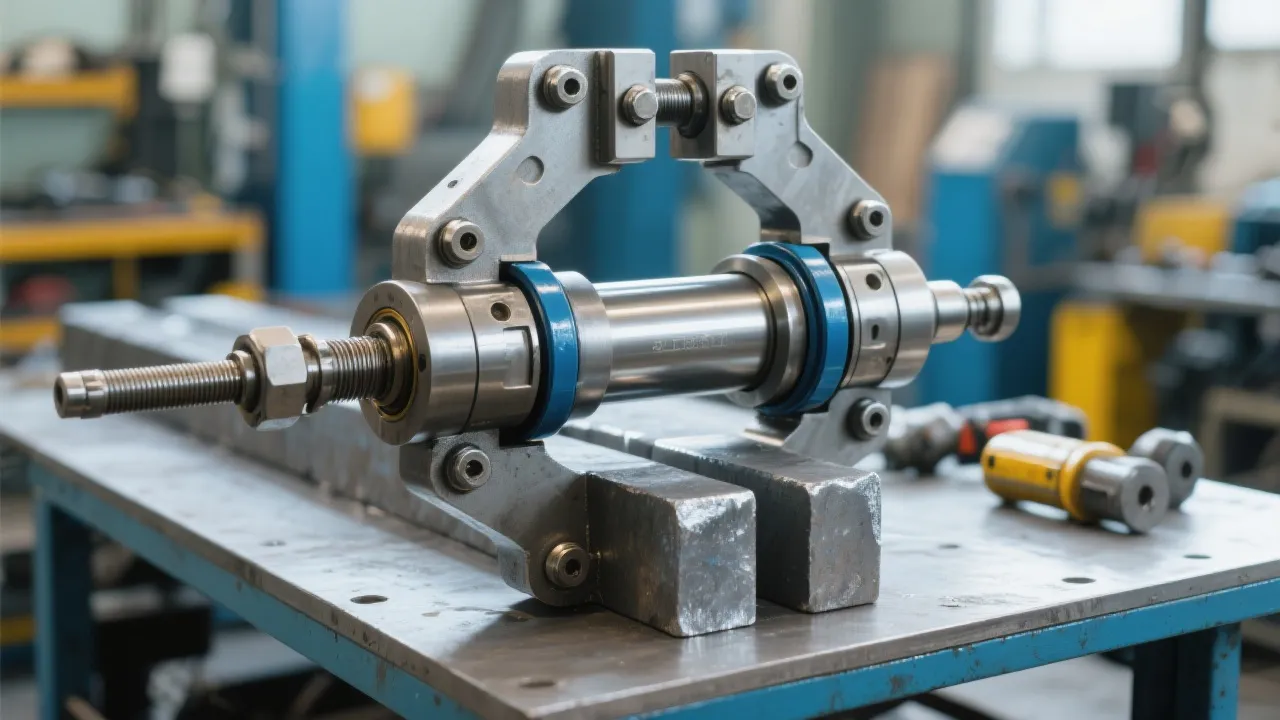
At a leading cold rolling steel plant in Southeast Asia, production bottlenecks were common—especially during the annealing process where hot steel plates had to be moved manually under extreme temperatures. That changed when they adopted an advanced hydraulic-powered steel plate clamp. Within just three months, their team reported a consistent 30% increase in throughput across the annealing line.
In today’s competitive global market, every minute counts. For steel manufacturers, reducing cycle time isn’t just about speed—it’s about safety, consistency, and scalability. The case study below shows how one company turned inefficiency into a strategic advantage using smart automation tools.
| Metric | Before Clamp | After Clamp |
|---|---|---|
| Cycle Time per Plate (min) | 4.2 | 2.9 |
| Operator Risk Incidents/Month | 7 | 1 |
| Clamp Maintenance Cost/Month | $850 | $320 |
The key? A fully automated, hydraulically driven clamp system that adapts to varying plate thicknesses—from 2mm to 25mm—and adjusts grip pressure in real-time. Unlike traditional mechanical clamps that require manual alignment and force adjustment, this solution ensures precise handling even at 600°C+ temperatures.
“We used to lose up to 15 minutes per shift due to misalignment or slipping,” said Mr. Lin, Head of Operations at the facility. “Now, with automatic opening/closing and adjustable torque control, our operators can focus on quality checks—not physical strain.”
This isn’t just a story—it’s a data-backed transformation. In fact, over 40 steel plants worldwide have implemented similar systems, reporting average improvements of 25–35% in material handling efficiency, according to a 2023 industry report from Metalworking Insights.
What sets these clamps apart?
As Dr. Sarah Chen, a metallurgical engineer at the University of Birmingham, notes: “This kind of adaptive automation is no longer optional—it’s essential for modernizing steel production lines.”
If you're managing a steel mill or planning a process upgrade, consider how smarter lifting tools can drive measurable gains—not just in output, but in safety, morale, and long-term sustainability.
Ready to see how your operation could benefit from a 30% efficiency boost?
Get Your Free Process Audit TodayHave questions about implementing this technology in your plant? Share your challenges in the comments—we’ll help you find the right path forward.


%20Clamp-2.jpg?x-oss-process=image/resize,h_1000,m_lfit/format,webp)